Level 3 · Lesson 8
Aggression & bet sizing
Winning poker is aggressive poker. Betting and raising give you two ways to win a hand; calling gives you only one. After this lesson, you'll bet with purpose — the controlled aggression that wins pots cautious players leave behind.
Why aggression wins
When you bet or raise, you can win the pot two ways: your opponent folds, or they call and you have the better hand. When you only call, you can win just one way — by having the best hand at showdown. That extra route to victory, called fold equity, is why measured aggression beats passive play over time.
The classic winning style is tight-aggressive: play relatively few hands (Level 2), but play them assertively — betting and raising rather than checking and calling.
Sizing as a fraction of the pot
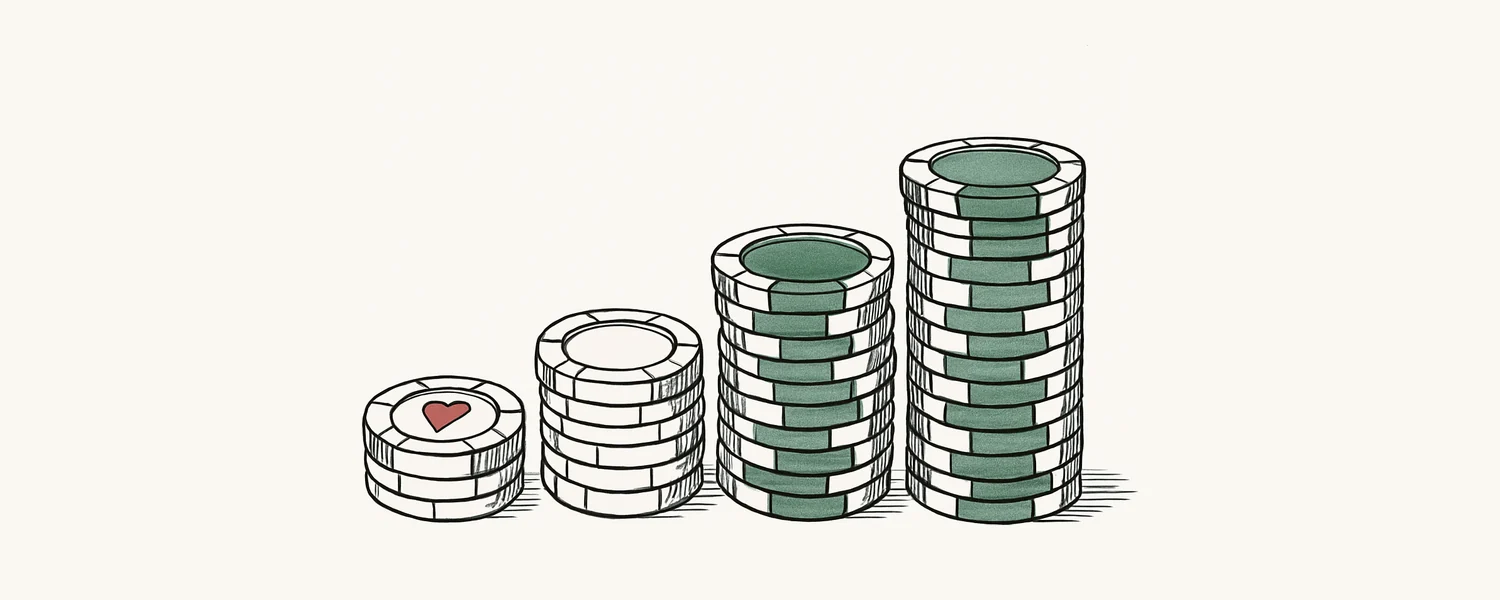
Bets are best thought of relative to the pot, not as fixed chip amounts. Common sizings:
- Small (¼–⅓ pot)Cheap pressure on dry boards; lets you bet often.
- Medium (½–⅔ pot)The workhorse — good balance of value and fold equity.
- Large (¾–full pot)For big value and strong draws on wet, dangerous boards.
- Overbet (> pot)Advanced — maximum pressure with the nuts or a bluff.
Notice the link to pot odds: a bigger bet gives your opponent worse odds to chase a draw. A pot-sized bet offers them 2-to-1 (they need 33%); a half-pot bet offers 3-to-1 (they need 25%). Size up to charge draws, size down when you want calls from worse hands.
Value bets vs bluffs
Every bet is one of two things:
- A value bet — you expect to be called by worse hands, so you want them to call.
- A bluff — you expect better hands to fold, so you want them to fold.
If a bet is neither (worse hands fold, better hands call), it's just burning chips. Before betting, ask: who calls me, and am I ahead of them?
Check yourself — no peeking
Answer each from memory. Retrieving the answer is what builds lasting recall.